|
|
![]() |
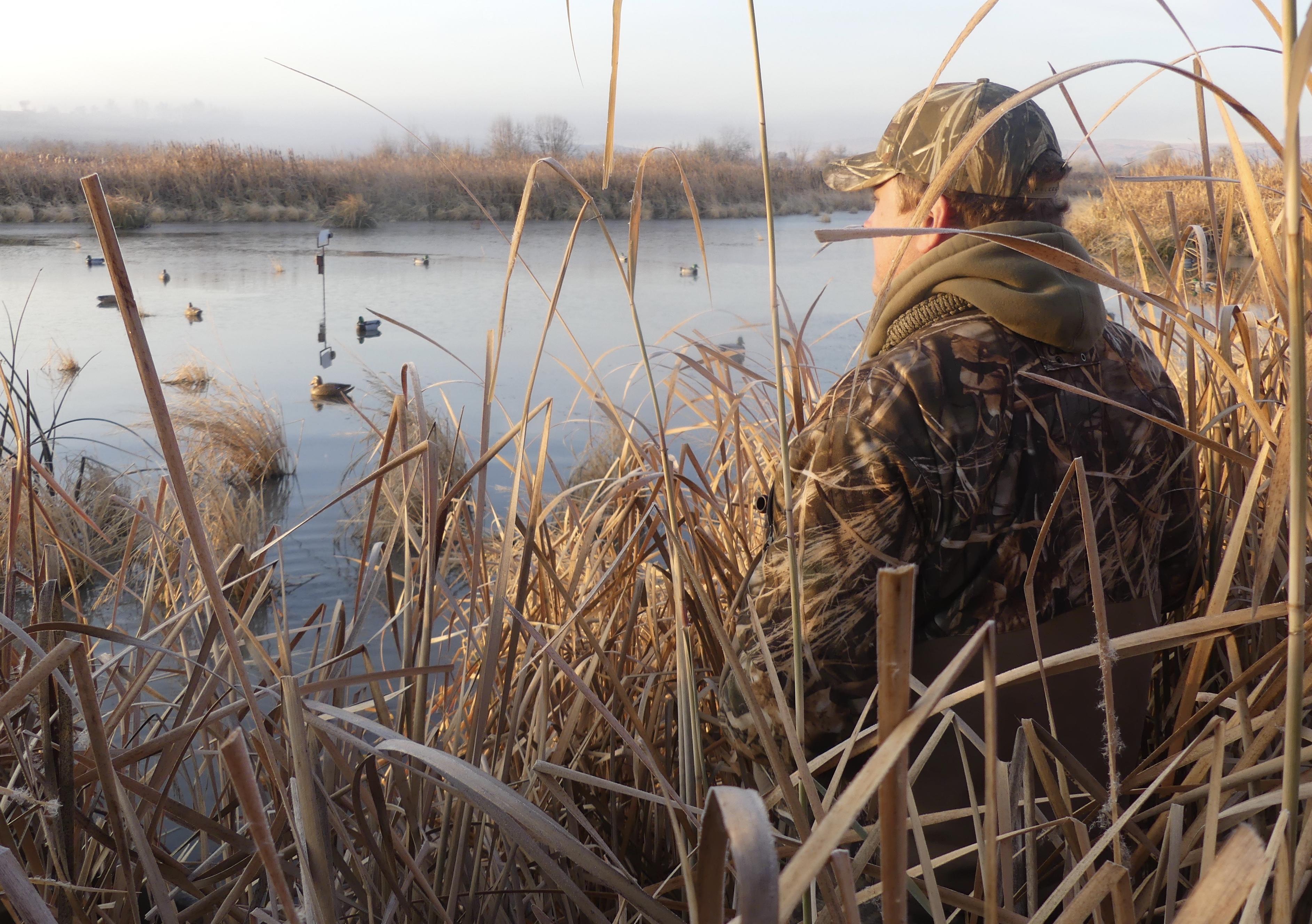
| Photo © Rita Dixon |
With over 1,000 animal species on the federal Threatened and Endangered Species list, our nation clearly needs a robust program to address problems early on to avoid costly, intensive measures for the recovery of these species. The number of listed species has doubled in the last 10 years with many more in the pipeline. Declines to species populations and their habitats will continue in the future unless resources are provided for proactive conservation efforts. Once a species is listed, the amount of federal dollars needed to protect or restore these species is far greater than would have been required to prevent their decline in the first place. Annual federal expenditures for the recovery of listed species has increased by more than six fold over the past 10 years to an expenditure level of over $300 million (without including land acquisition or state listed species).
State wildlife agencies are the backbone of our nation's wildlife conservation. United States laws and policies place the primary responsibility for implementing wildlife management programs in the hands of the 50 states, but effective management and conservation depends upon a partnership with Congress to provide consistent and adequate funding to the states. For decades, federal funding to the states in the form of excise taxes on arms and ammunition (Pittman-Robertson Federal Aid to Wildlife Restoration Act of 1937) and fishing equipment (Dingell-Johnson Federal Aid to State Fisheries Act of 1950 and Wallop-Breaux Act of 1984), has focused primarily on-and has been largely responsible for-enormously successful programs that ensure the conservation and sustainable use of important wildlife species hunted or fished by the millions of sportsmen and women across America. There has, however, been a serious gap in both state and federal funding for the many species of fish and wildlife not addressed by hunting and fishing license fees and excise taxes.
In 1980, Congress passed the Fish and Wildlife Conservation Act designed to assist the states in conserving the nation's "nongame" species. Unfortunately, Congress never appropriated funds for this program. More recently funds have become available through new programs that were created as a result of the effort and dedication of the Teaming with Wildlife (TWW) coalition led by groups such as: American Birding Association, International Association of Fish and Wildlife Agencies, National Audubon Society, National Wildlife Federation, National Wild Turkey Federation, The Wildlife Society, and the Wildlife Management Institute. These new federal funds continue the precedent of cooperation between the federal government and the states for managing and conserving wildlife species set by the Pittman-Robertson Act and the Dingell-Johnson/Wallop-Breaux Acts.
In fiscal year (FY) 2001, the federal government provided the first substantial funding for state nongame wildlife conservation and wildlife-related recreation and education. As part of the Commerce, Justice, and State (CJS) Department's appropriations, a new program, the Wildlife Conservation and Restoration Program (WCRP), distributed $50 million among the 50 states, the District of Columbia, the U.S. Territories, and the Commonwealth of Puerto Rico through a sub-account of the Wildlife Restoration Fund (Pittman-Robertson) (Table 1). Funds were distributed through a formula based upon one-third land area and two-thirds population size, and required a 25% non-federal match for conservation planning projects and a 50% match for implementation projects. The WCRP program closely followed the language TWW developed in Title III of the Conservation and Reinvestment Act (CARA). In addition, $25 million was made available to states in the State Wildlife Grants (SWG) competitive grants program through the Department of Interior appropriations.
As part of the FY 2002 - 2004 Interior appropriations bills, varying levels of annual funding were allocated to the SWG program, and additional funds were earmarked for Indian tribes to conserve wildlife on their lands (Table 1). SWG funding is intended for species with the greatest conservation need, as determined by the states. Unlike the WCRP, SWG funds are not available for conservation education and wildlife recreation, and all projects require a 50% non-federal match.
| Federal Funds | State Appropriations |
Tribal Appropriations |
Total Appropriations |
Idaho Portion of State Appropriations |
|---|---|---|---|---|
| WCRP FY01 | $50 million(a) | $50 million | $570,141 | |
| SWG FY01 | $25 million(b) | $25 million | $347,714 | |
| SWG FY02 | $80 million(a) | $5 million(b) | $85 million | $914,231 |
| SWG FY03 | $60 million(a) | $5 million(b) | $65 million | $685,673 |
| SWG FY04 | $64 million(a) | $6 million(b) | $70 million | $724,598 |
The SWG program is new federal funding to help states implement proactive species conservation and hopefully preclude species from becoming listed as threatened or endangered. This is the first time the federal government has provided substantial funding to the states to address species endangerment and habitat conservation in a proactive manner rather than just having the states participate in recovery activities for listed species under Section 6 of the Endangered Species Act. The SWG program provides an opportunity to turn this trend around, to help reduce the need for listing species, and to reduce the need for costly species recovery efforts. The SWG program provides the funding for States to realize the long-term goal and commitment to prevent species from becoming endangered. However, the challenge faced by many states, including Idaho, is to provide the 50% required non-federal match. At the current level of SWG funding, the Idaho Department of Fish and Game (IDFG) is able to provide the required match with funds from wildlife license plate sales, the income tax check-off for the nongame program, and a third-party grants program wherein applicants for SWG grant funds provide the required non-federal match. No hunting and fishing license/tag funds are used as match for SWG as these IDFG funds are used to provide the required 25% match for the Pittman-Robertson and Dingell-Johnson federal assistance programs for sport fish and wildlife.
![]() |
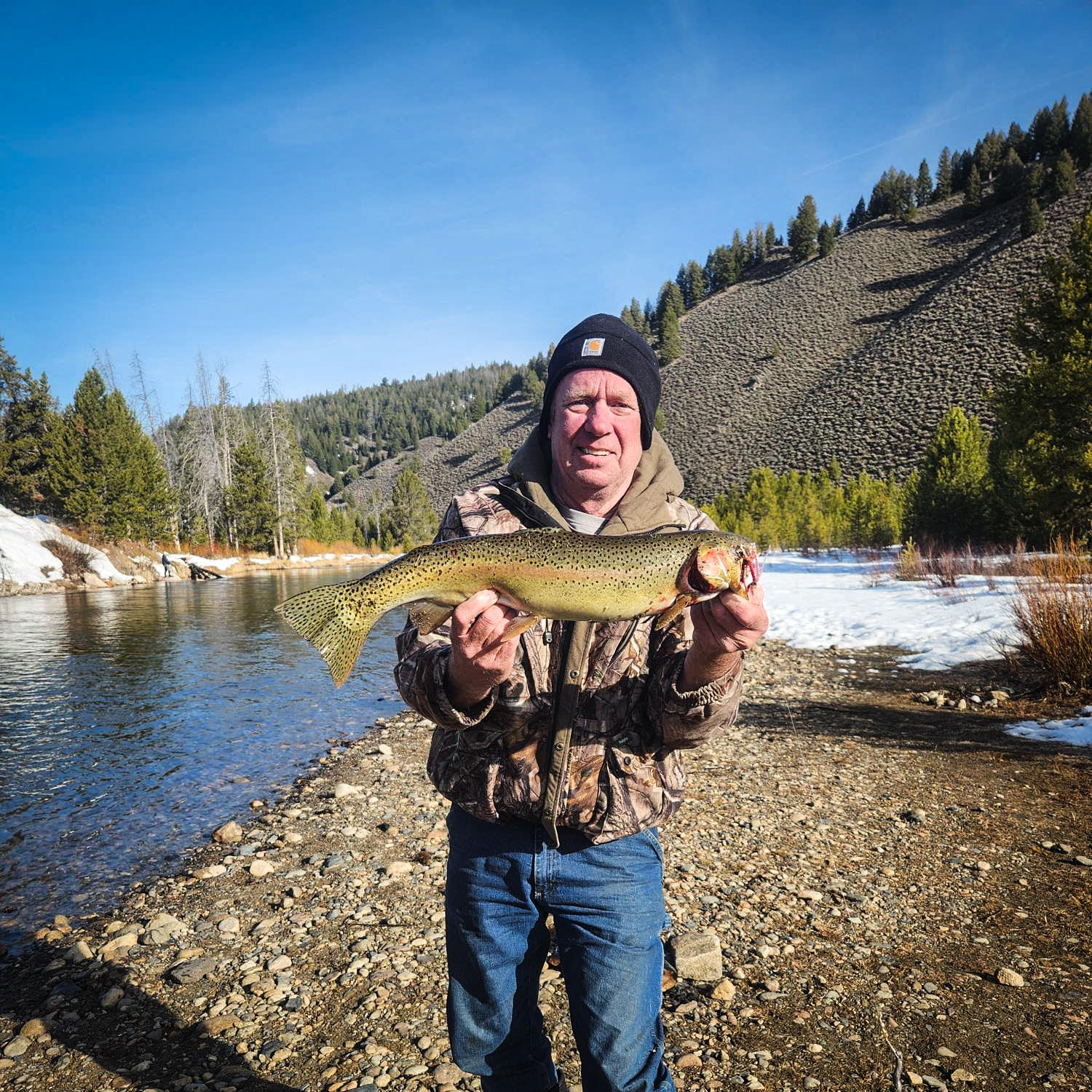
| Photo © Luana McCauley |
All states and territories that accept SWG monies must agree to produce a Comprehensive Wildlife Conservation Strategy (CWCS) by 1 October 2005. These strategies must identify and be focused on the "species in greatest need of conservation," yet address the "full array of wildlife" and wildlife-related issues.
The CWCS provides an opportunity for IDFG to provide effective and visionary leadership in wildlife conservation. The CWCS can identify the measures that will be used, the results achieved, and the threats and needs that remain with regard to wildlife and wildlife habitat. It is also an opportunity to address broader issues and programs, including environmental and wildlife-related education, outdoor recreation, and wildlife-related law enforcement. These other areas can constrain, or enhance, wildlife conservation efforts, and funding and public support for wildlife conservation can be increased, or at least stretched, by involving partners that share those interests.
Congress has provided the States and Territories with a list of 8 required elements that the U.S. Fish and Wildlife Service (FWS) must use as criteria to evaluate whether a state's CWCS meets the letter and spirit of the law. These required elements are:
Planning Process and Partnerships
Q1. What must be contained within Idaho's Comprehensive Wildlife Conservation Strategy, and is there a universal format to ease interstate collaboration and utility?
A. Idaho's Comprehensive Wildlife Conservation Strategy must include the following items:
Q2. Must Idaho produce a State Comprehensive Wildlife Conservation Strategy if Congress approves no additional funding in subsequent years for this program?
A. Yes. Each State must submit a plan by October 2005 as Congress has mandated. If a State does not produce a State Comprehensive Wildlife Conservation Strategy, Federal Aid (FA) may require it to repay the funds it has used under this program.
Q3. Could some or all of Idaho's previous planning efforts and outcomes qualify as its State Wildlife Grant (SWG) Comprehensive Wildlife Conservation Strategy?
A. Yes. They can, as long as the State plan satisfies the requirements specified in the answer to Q1.
Q4. How is "wildlife" defined for the purposes of this program?
A. The term wildlife means "any species of wild, free-ranging animal, including fish, and also animals in captive breeding programs the object of which is to reintroduce individuals of a depleted indigenous species in a previously occupied range."
Q5. What is the meaning of "species in greatest need of conservation?"
A. IDFG will determine these species in the context of developing its Comprehensive Wildlife Conservation Strategy. These species must be animals, and not plants, and may include aquatic species and invertebrates. IDFG's list of "species in greatest need of conservation" may include currently listed federal and state wildlife species and other species of concern. We anticipate that the composition of this list will change over time, as the status and conservation needs of a species change within Idaho.
|
|
CONTACT US | TERMS AND CONDITIONS | PRIVACY POLICY | EMPLOYMENT | MISSION STATEMENT |
©
Idaho Fish and Game
|
|